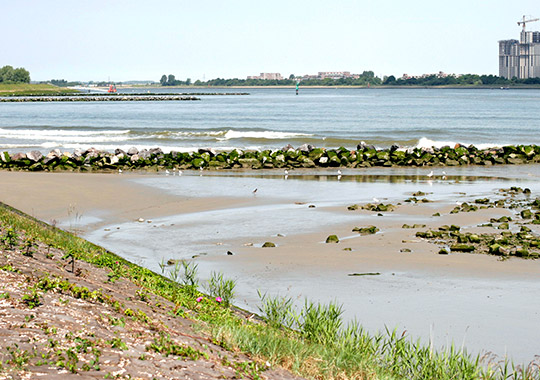
Groyne for riverbank growth and vegetation
Once a groyne designed using hydromorphological knowledge is in place, nature herself takes over and produces a landfall, vegetation and a habitat for animals.
-
The solution
A groyne consists of soil and hard material that is positioned perpendicular to the length of the river to reduce waves and currents.
-
How it works
The positioning and the design of the groyne can be highly complex: it is important to take local currents and wave patterns into account. The groyne produces an area with moderate waves and currents. Suspended material in the river is then deposited here. That results in deeper localised areas where plants and animals thrive on the rich sediment.
-
Why is this Building with Nature?
Most green projects in rivers involve only putting in an earth body and planting vegetation. Maintaining the new situation requires a lot of work. A groyne creates different currents and wave conditions. Then nature takes over.
It is important to point out that groynes extend into the river, by contrast with the approach involving digging away the existing river bank. As a result, groynes may back up the river water. This effect will have to be studied in each particular situation.